

Ferrite Magnet Sensing
Magnetic field sensing with ferrite magnets: Reliable performance without rare earth materials
How TDK-Micronas enables high-precision sensing with rare-earth and non-rare-earth magnets
Magnetic field sensing plays a central role in modern automotive and industrial systems. Position, angle, speed and torque are measured thousands of times per second in safety-critical applications - from powertrain components to thermal-management valves.
Every magnetic sensing system consists of two core elements: a magnet (the target) and a sensor such as a Hall or TMR device. For decades, target magnets were primarily based on rare earth materials, valued for their strength and temperature stability. But with global supply constraints rising, manufacturers are increasingly looking for altenatives that remain cost-efficient, robust and future-proof.
TDK-Micronas offers magnetic field sensors that operate reliably with rare-earth magnets (NdFeB, SmCo) as well as ferrite magnets, enabling customers to stabilize their supply chain without sacrificing performance.
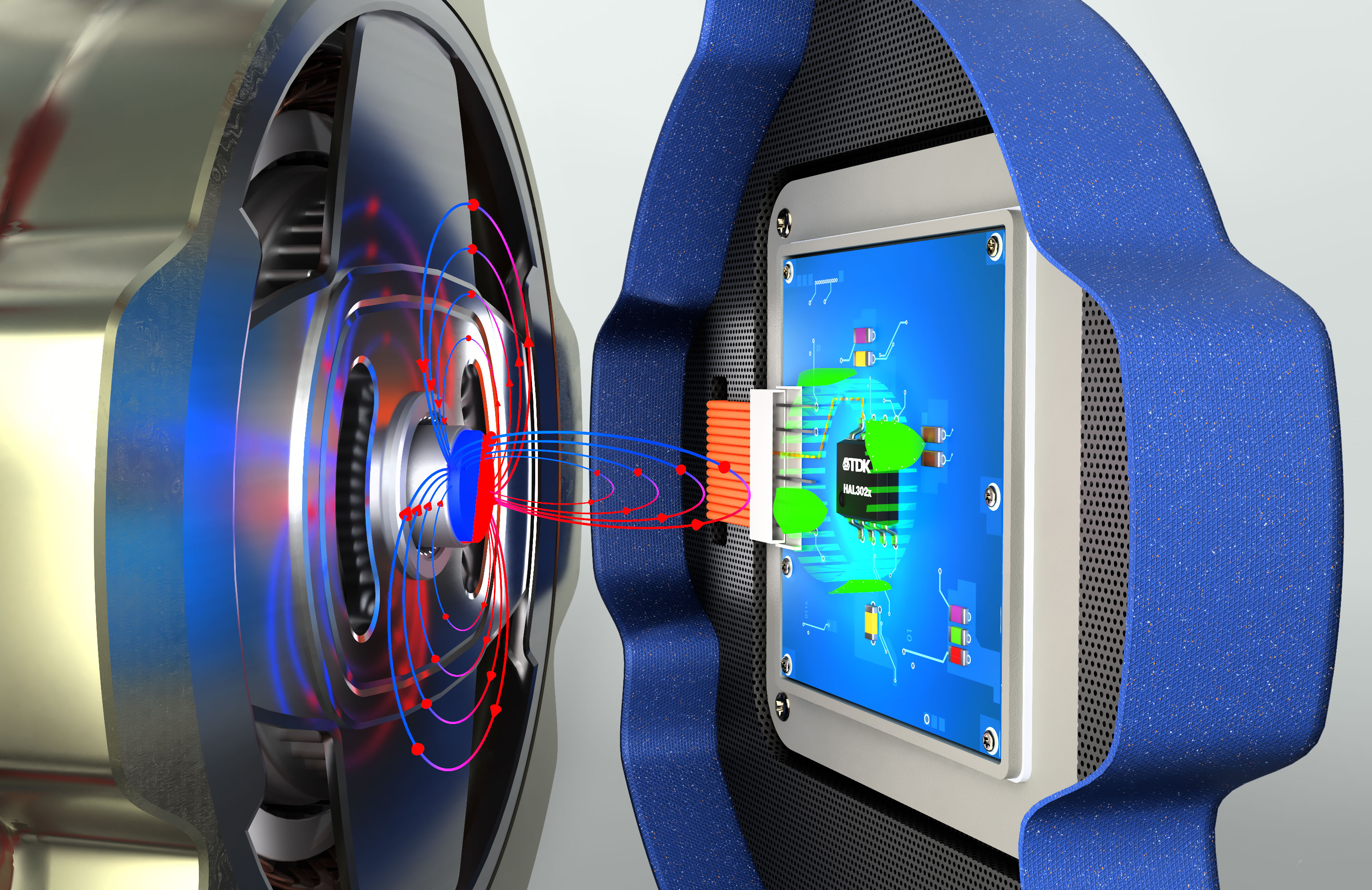
Figure 1: Magnetic field sensor mounted on a motor shaft for
speed and angle detection in Automotive braking application.
Why rare-earth magnets became standard in automotive sensing
Rare earth elements such as neodymium, dysprosium or terbium help stabilize the internal dipole structure of magnetizable materials. This results in:
- High coercivity - strong magnetic fields even with small magnets
- High temperature stability - reliable performance in hot environments
- Compact size - ideal for tight mechanical spaces
Ferrite magnets: A cost-efficient and sustainable alternative
Ferrite magnets offer:
- Sufficient field strength for many position and angle sensing applications
- Excellent resistance against thermal demagnetization
- Attractive cost levels for high-volume production
- No ecological concerns from mining rare earth elements
TDK-Micronas sensors optimized for ferrite-based magnetic systems
HAL 39xy and HAL 35xy - High-sensitivity 3D Hall sensors for automotive applications:
- Accurate angle measurement even at 20 mT ferrite-field strength
- Low noise for clean, stable signals
- 6-cell Hall architecture (6ZD)
- Excellent stray-field robustness
- Full automotive temperature stability (AEC-Q100 Grade 0)
- Integrated temperature compensation
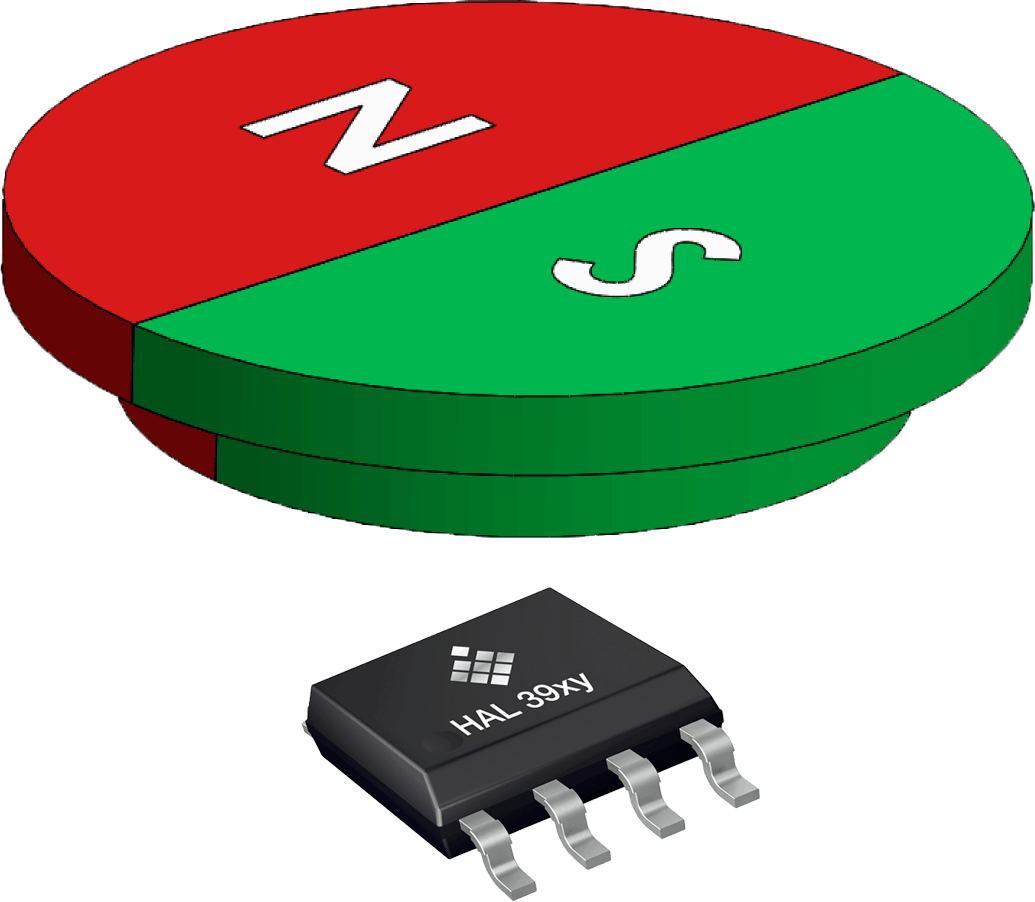
Figure 2: HAL 39xy 3D Hall position sensor in an
end-of-shaft configuration with ferrite magnet.
Stable performance over temperature, airgap and lifetime
The HAL 39xy maintains:
- Total angle error below 1°, including temperature and lifetime effects
- Reliable performance across variable airgaps
- Long-term stability under harsh thermal cycling
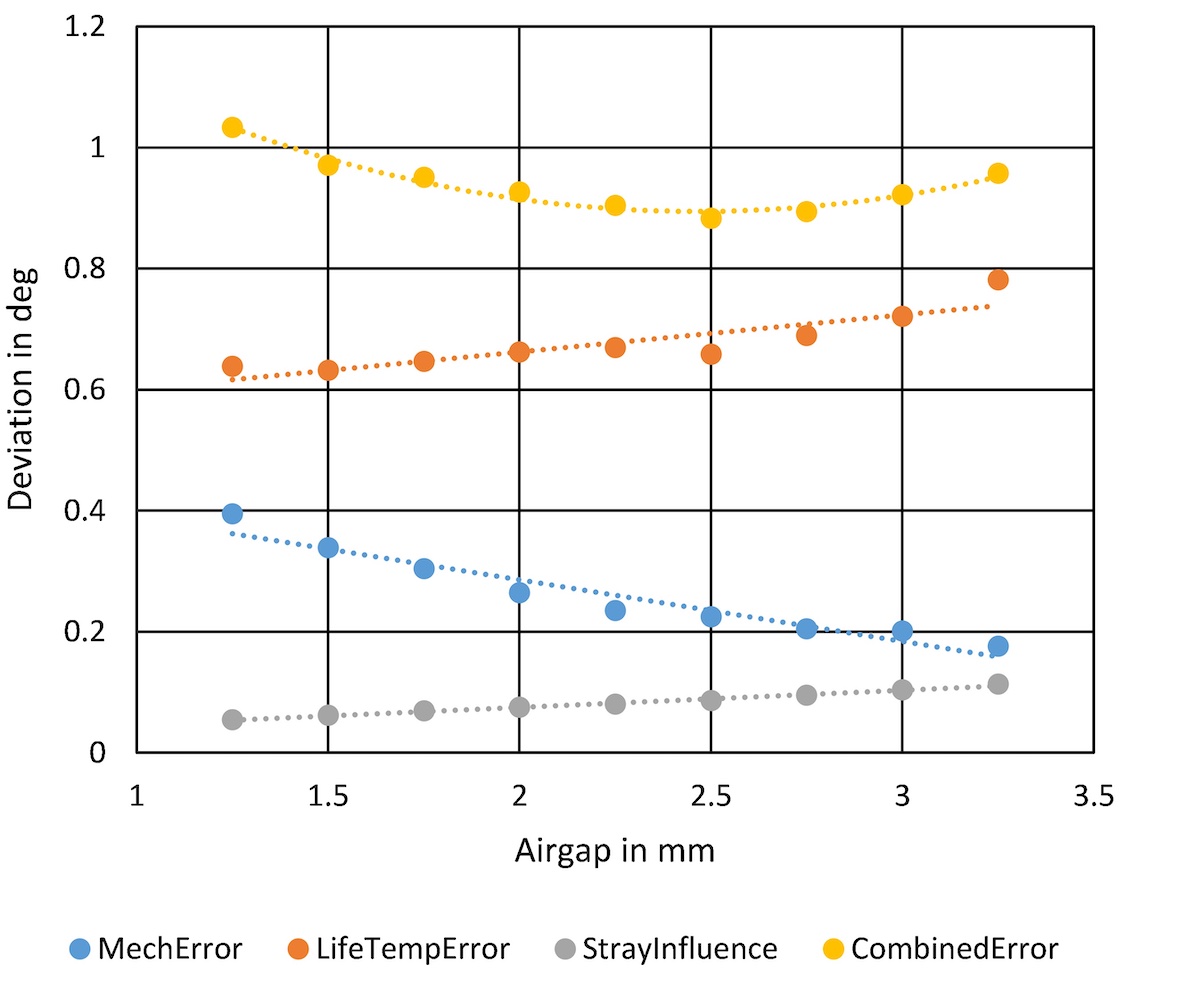
Figure 3: Total angle error of the HAL 39xy across
temperature and lifetime with a 20 mT ferrite magnet.
Beyond position sensing: Ferrite-compatible sensor families
- HAL 3021 fast Hall sensors for BLDC/PMSM motor commutation
- HAL 18xy, HAL 83y and HAL 24xy family for 1D linear Hall sensing with programmable low magnetic field ranges and continuous temperature compensation for ferrite magnets
- HAL 15xy Hall Switch family for various end position detection, index counting and BLDC motor commutation. HAL15xy can be customized to ferrite magnet compatible temperature coefficients and low switching points.
Supporting customers through the transition to ferrite magnets
TDK-Micronas provides:
- Optimized reference designs
- Application notes and guidelines
- Joint sensor–magnet co-optimization
- Proven solutions validated by automotive manufacturers
Ready to evaluate ferrite-based magnetic sensing for your application?
Our technical sales team is happy to support you with system design, reference magnets and application guidance.